
Draft: this article is still being reviewed.
Private deposit and private withdrawal
With a sole proprietorship, your business money and your private money legally both belong to you. Even so, you keep them apart in your records. Money that moves between private and business is called a privéstorting (private deposit) or a privéopname (private withdrawal).
Private withdrawal
You transfer money from your business account to your private account. That is your "salary" as a freelancer. It is not a cost: private withdrawals are not deductible from your profit. (Belastingdienst: private deposits and withdrawals)
Private deposit
You put private money into your business account, for example to pay for a large purchase. That is not revenue. Private deposits are not business profit, because they are not business income.
Paid for business with private money
Do you pay a business expense with your private card? That is also a private deposit. The expense is simply a business cost. Your business account does not change because of it.
Paid privately with business money
Do you pay for something privately with your business card? That is a private withdrawal. Do not book it as a cost.
Why keep track?
Your profit does not change because of private deposits and private withdrawals. Your own equity on the balance sheet does change. Without these entries, your balance sheet does not match your bank account.
In ZZPboek
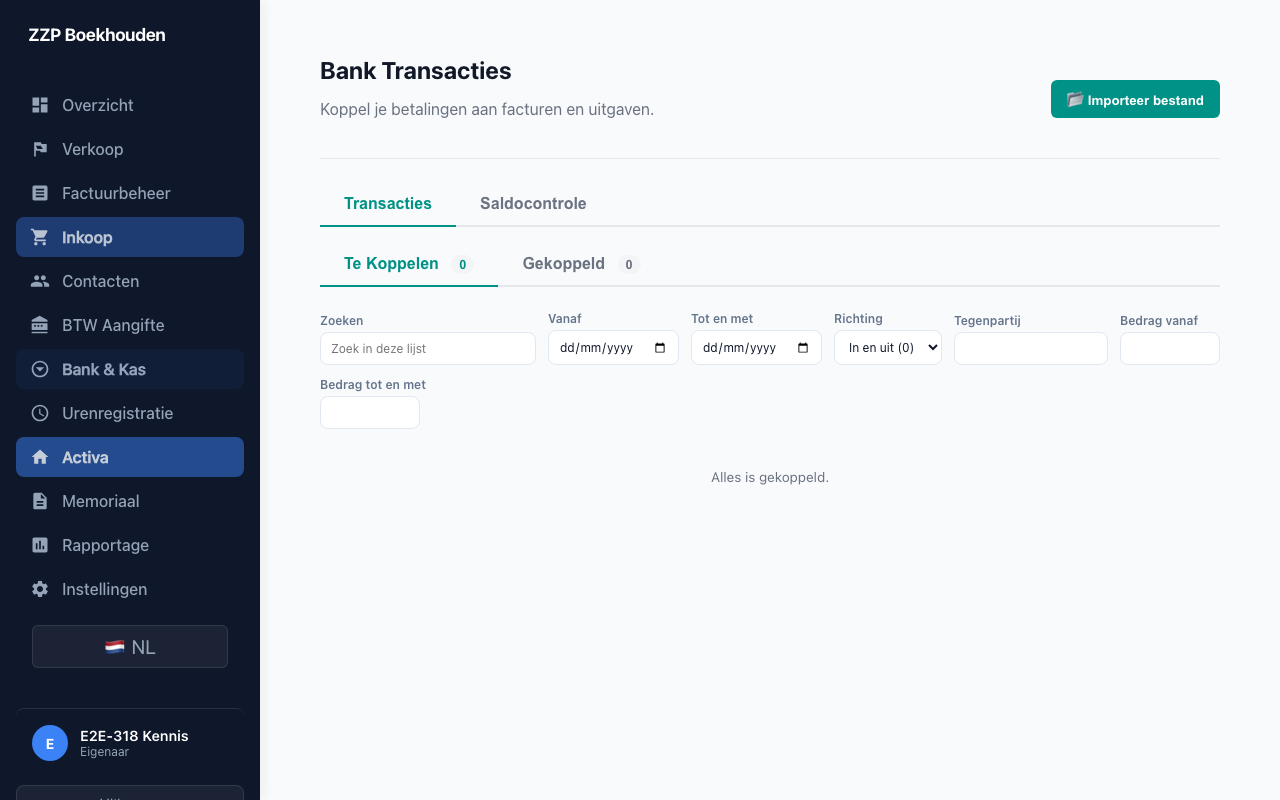
A transfer to your own private account is linked to "private" in the bank screen. A purchase that you paid privately, you tick as "paid with private money". The app books that as a private deposit.
Sources
This article is general information, not tax advice. If you are unsure about your situation, ask the Belastingdienst or an adviser.